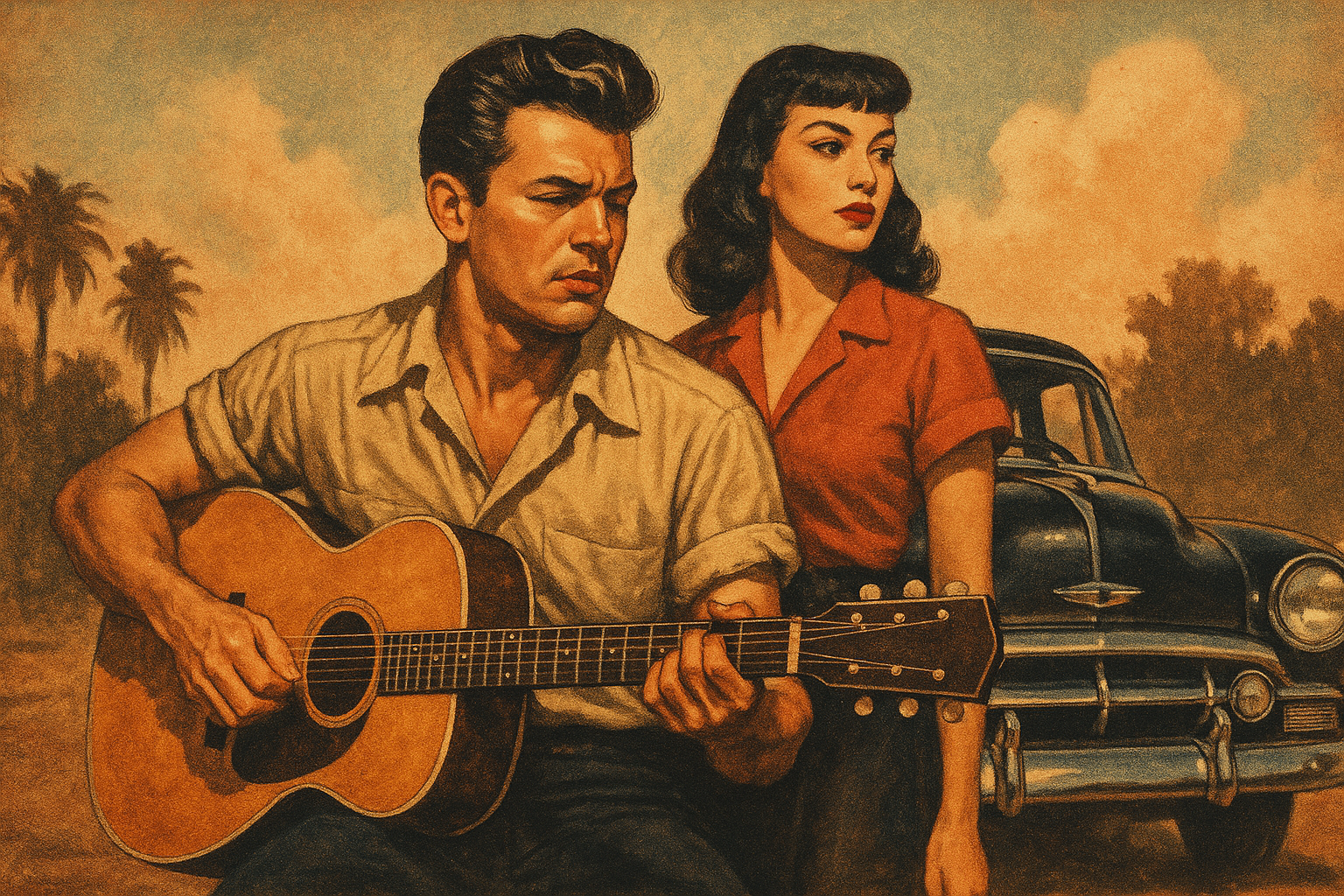

Classic Rock and Roll: The Original Shockwave
Classic rock and roll is usually discussed as one of the defining popular music shifts of the 1950s.
Its impact was not only musical. It also reshaped radio programming, youth dance habits, stage behavior, and visual codes around live performance.
Core Ingredients
Many canonical recordings share a recurring structure:
- strong rhythmic emphasis (often backbeat-centered)
- riff-led guitar and/or piano framing
- direct, high-energy vocal delivery
- concise arrangements built for quick impact
Not every track follows the same formula, but this pattern appears frequently in the first wave.
Built From Crossroads
Classic rock and roll drew from multiple traditions, especially rhythm and blues, country, jump blues, and gospel-rooted phrasing.
That blend helped create a format with wider audience crossover than many earlier niche categories.
Artists Who Set the Standard
Artists commonly cited in this foundation include Chuck Berry, Little Richard, Fats Domino, Jerry Lee Lewis, Buddy Holly, and Elvis Presley.
Their catalogs differ in style, but together they define much of the songcraft and performance language later adopted across rock-oriented genres.
Why It Still Feels Fresh
Many tracks still feel immediate because the writing is compact and rhythm-forward.
For modern listeners, this usually translates into fast recognizability: hooks arrive early, grooves are readable, and performance intent is clear.
Connection to Today’s Rockabilly Scene
Rockabilly and classic rock and roll still overlap in practical ways: dance-floor orientation, small-band energy, and preference for direct songwriting.
Understanding this overlap helps explain why many contemporary rockabilly events program both repertoires.
One Rule That Never Changed
For live contexts, one criterion remains useful: whether the song actually works in the room.
This is often a better quality test than genre labels alone.