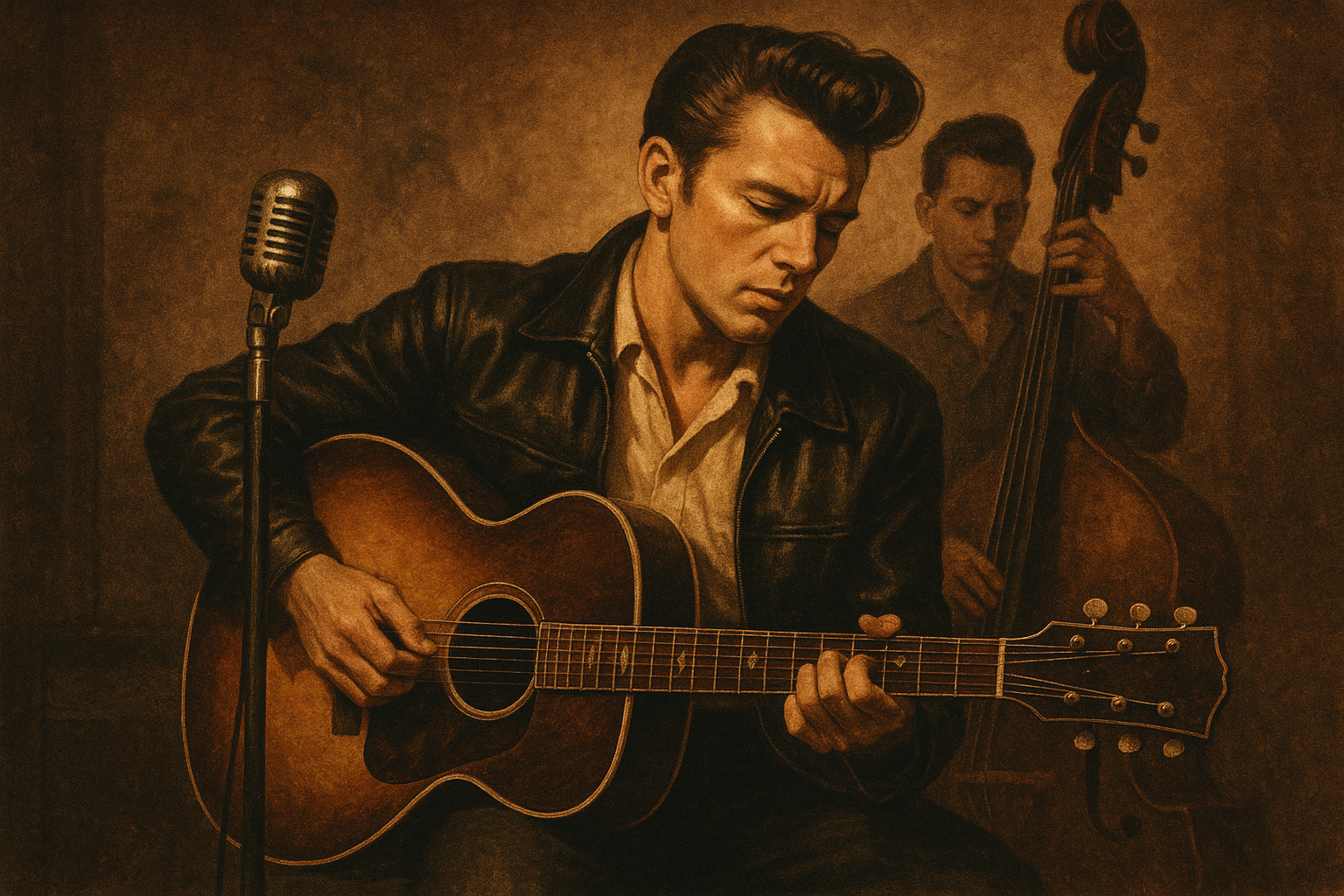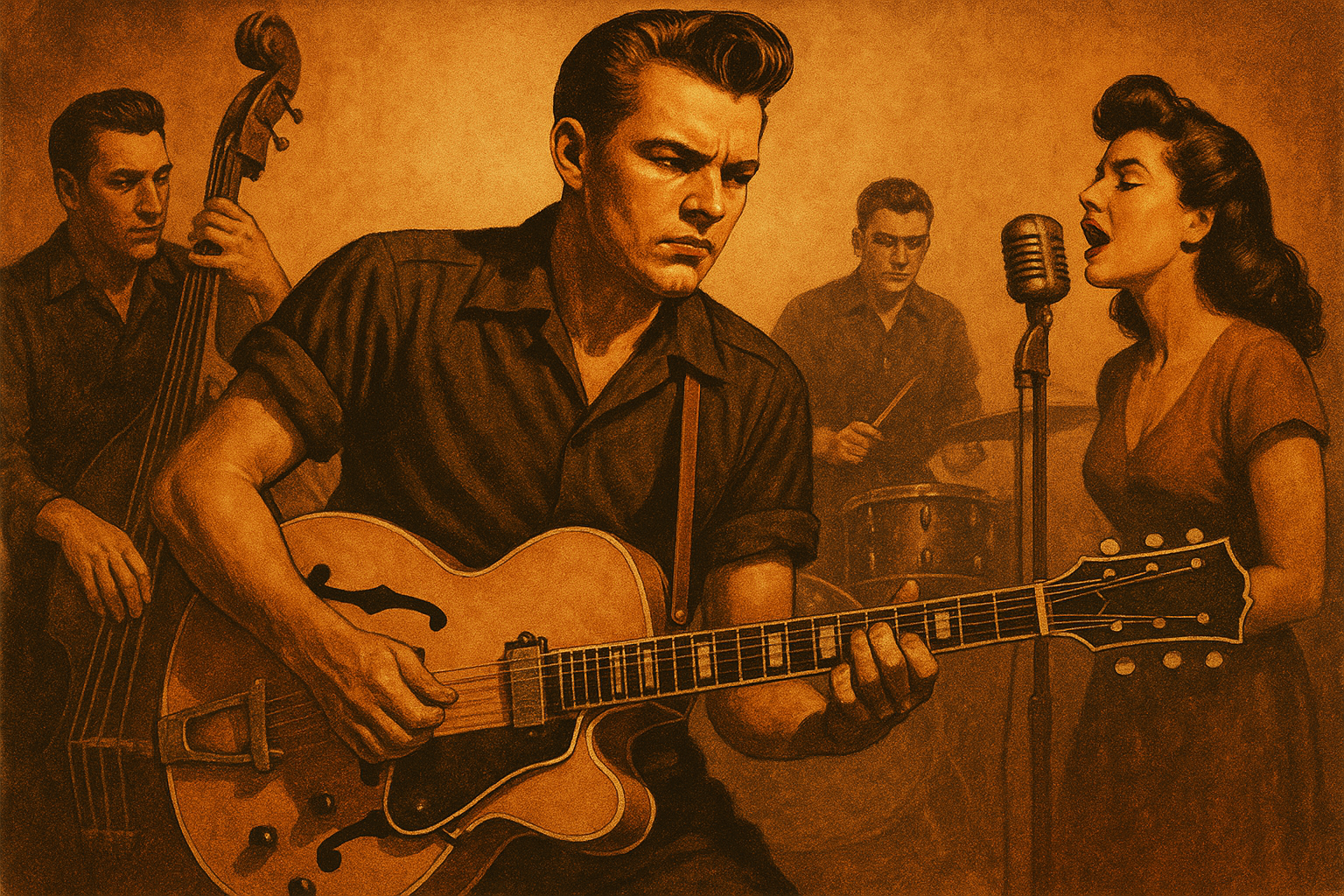
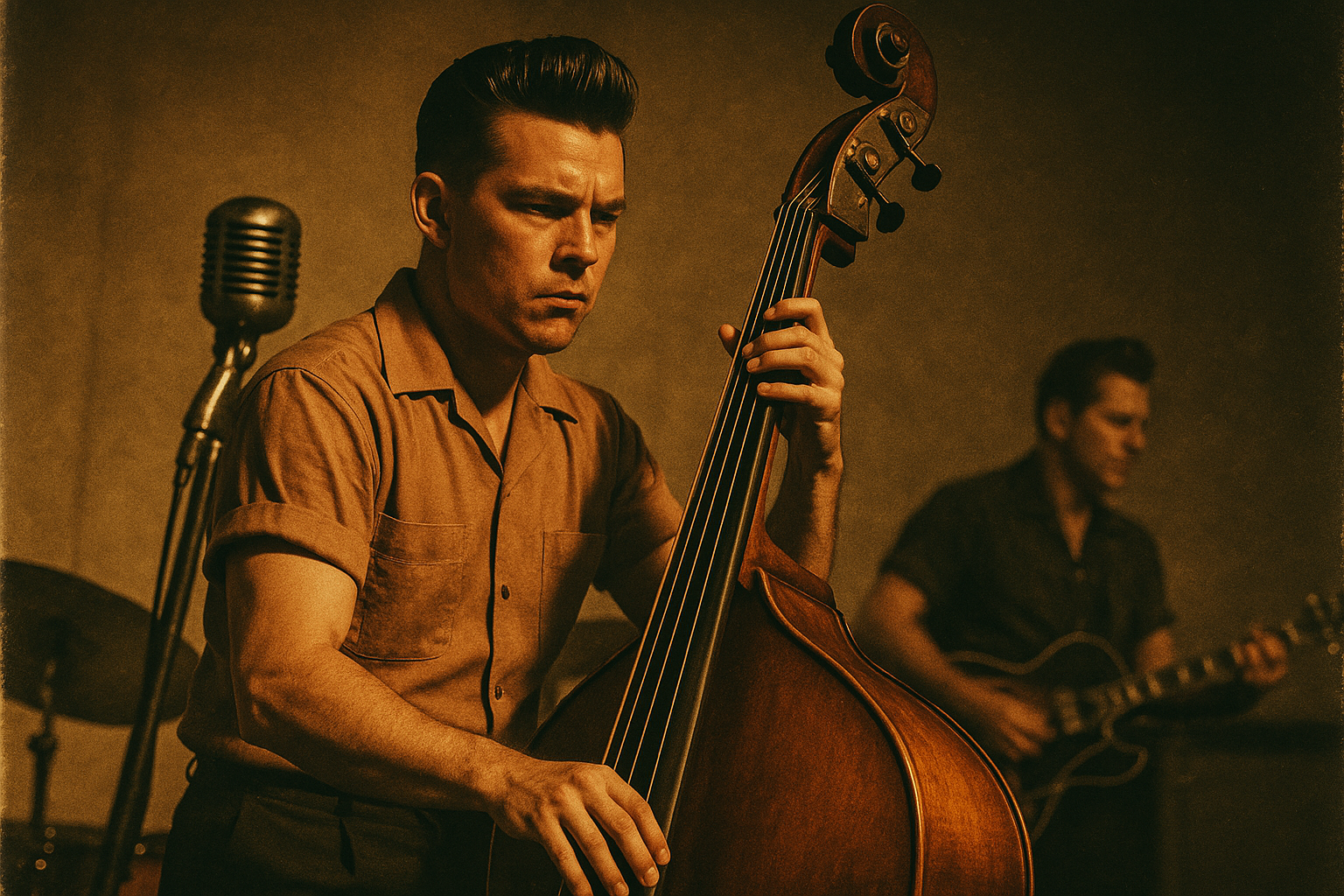
Upright Bass in Rockabilly: The Real Engine Room
In rockabilly-oriented arrangements, upright bass is usually structural rather than decorative.
It supports harmony, drives pulse, and can add percussive impact through slap technique.
Why It Matters So Much
A strong upright player often acts as the main bridge between drums and guitar. That interaction contributes to the tight, percussive bounce many listeners associate with the style.
The Slap Effect
Slap technique adds a second rhythmic layer above the pitched note itself, increasing transient definition and rhythmic urgency.
When executed cleanly, it can improve groove definition and reinforce dance-floor readability.
Live Sound Reality
Upright bass can be challenging on stage because of feedback, pickup/mic balance, and room resonance. Setup discipline matters as much as instrument choice.
Visual Power on Stage
Rockabilly is both sonic and visual. Upright bass also contributes visible stage presence, which can reinforce perceived energy in live settings.
Upright vs Electric Bass
Electric bass can work in hybrid projects, but upright typically produces a different transient and cultural reference profile. For classic-leaning approaches, upright is often preferred.
Beginner Focus
Focus on timing first, keep lines simple early on, practice slap with metronome control, and add speed only after consistency is stable.
The style generally rewards groove discipline more than flashy shortcuts.