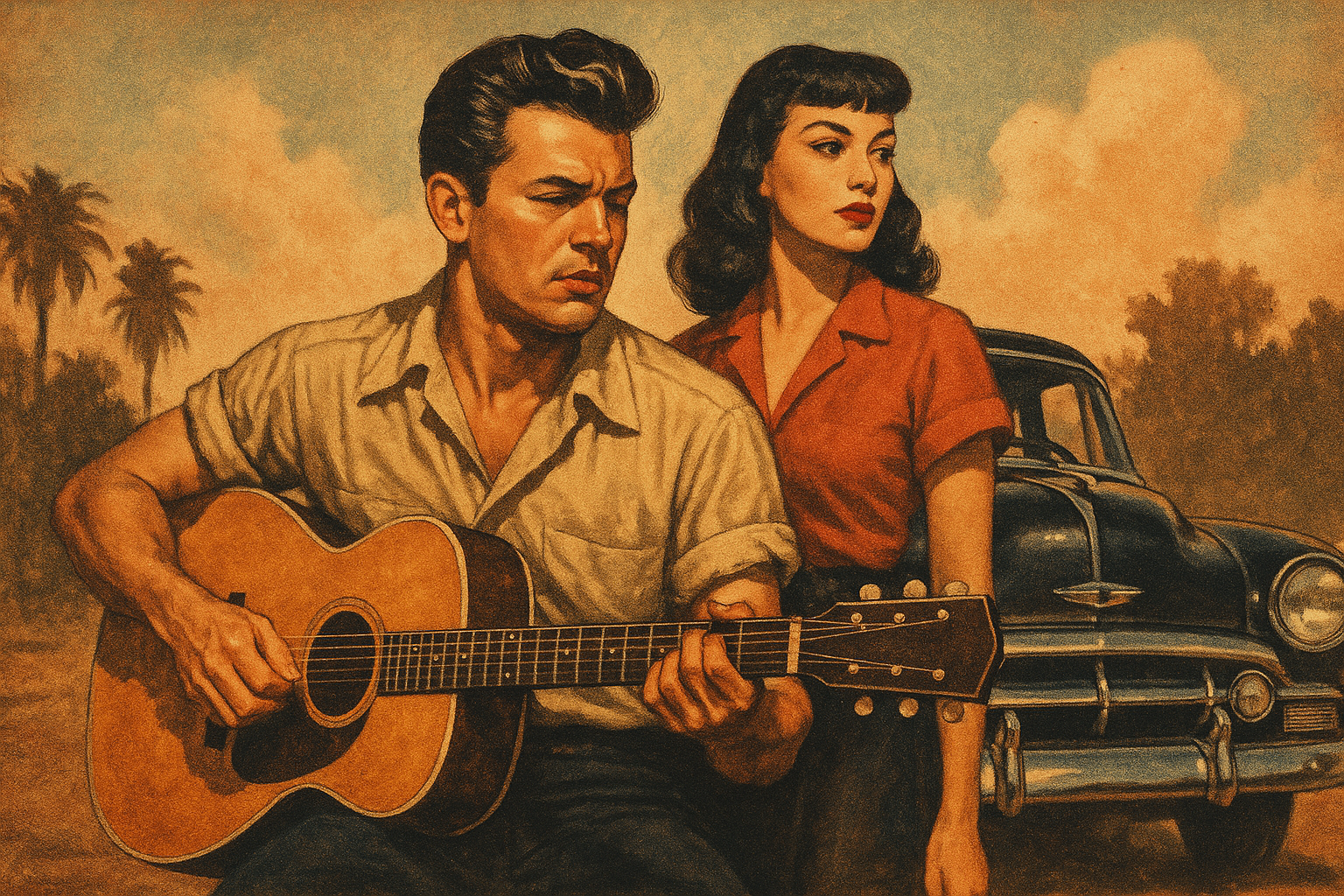

Hillbilly Roots: The Country Backbone of Rockabilly
Rockabilly is often presented through its rebellious image, but that view is incomplete without its country foundation.
Much of its early vocabulary comes from what the industry used to label as “hillbilly” music: rural song forms, narrative lyrics, and direct melodic phrasing.
What “Hillbilly” Meant Back Then
Historically, “hillbilly” was a commercial label used in early recording and radio contexts for strands of country music.
The repertoire usually included fiddle-driven material, gospel influence, acoustic arrangements, and songs centered on work, migration, faith, heartbreak, and everyday survival.
What Rockabilly Borrowed
Rockabilly drew multiple elements from those traditions:
- concise, memorable structures
- story-led lyric writing
- guitar-centered arrangements
- compact band formats
Those elements were then combined with stronger rhythm and blues emphasis.
From Front Porch to Studio Tape
Many first-wave artists were shaped by regional radio and country-oriented repertoires before entering studio environments in the 1950s.
Instead of erasing those roots, many recordings electrified them. That is one reason classic rockabilly can sound both rustic in phrasing and aggressive in rhythm.
Why This Matters in 2026
For today’s musicians, promoters, and writers, this context is practical rather than academic. It improves song selection, arrangement choices, and editorial accuracy.
Without that foundation, content tends to drift toward surface aesthetics only.
Listening Tip
A useful exercise is to compare one early country/hillbilly recording with one early rockabilly recording and focus on melody contour, lyric structure, and rhythmic placement.
This side-by-side listening makes the lineage easier to hear without relying on myth or oversimplification.