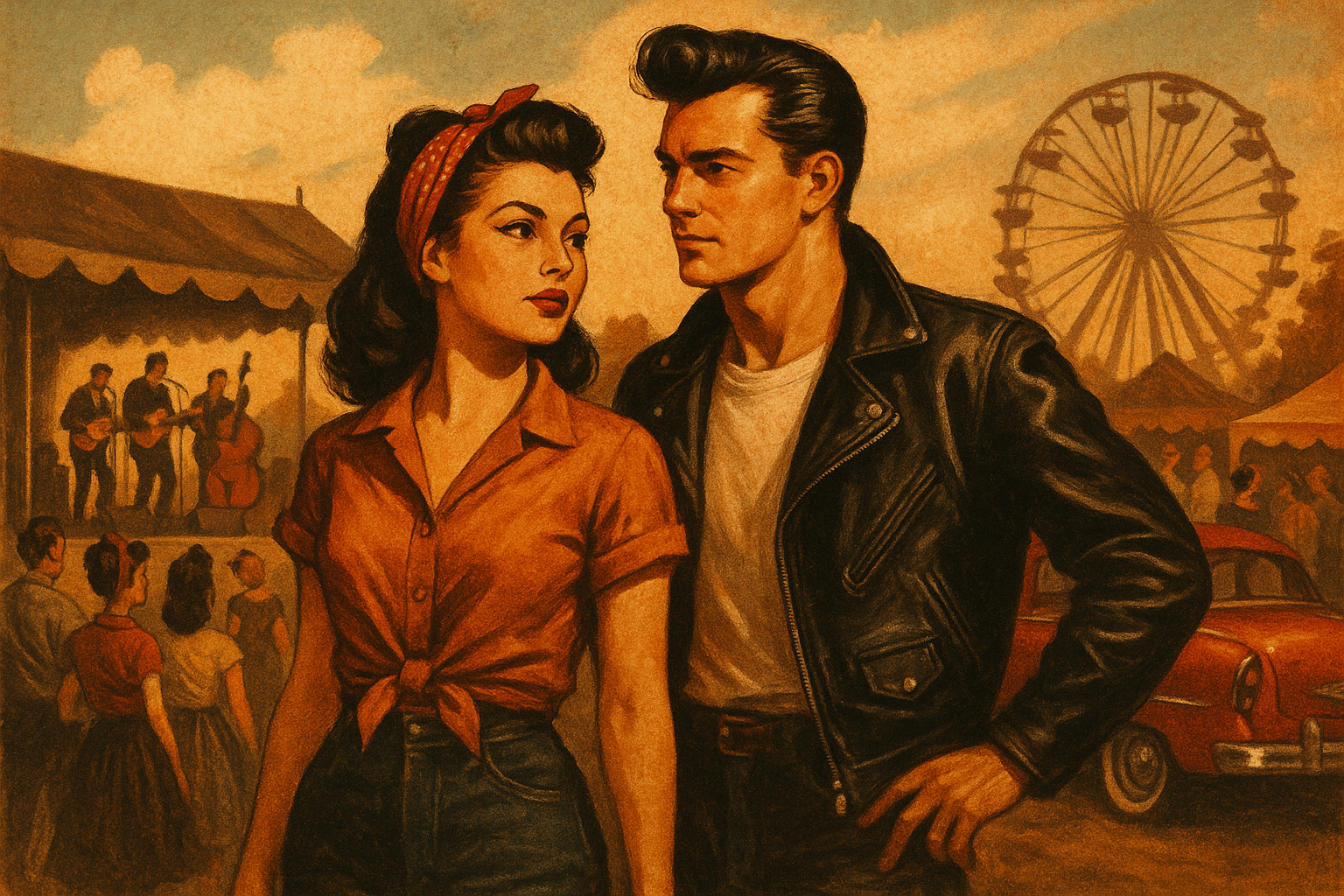

Jive: Fast Feet, Sharp Style, Zero Excuses
Jive is one of the key social dances used across many rock and roll and rockabilly events.
Its value in scene culture is practical: it translates rhythm into visible interaction, creates dance-floor participation, and helps connect newcomers with experienced dancers.
What Jive Needs From Music
Not every fast song works equally well. Dancers usually look for tracks with:
- stable pulse
- clear accents
- readable phrase structure
- enough dynamic contrast for breaks and re-entry
This is why DJ programming quality strongly affects dance-floor continuity.
Technique Over Random Speed
Jive is not random speed. It depends on timing, posture, and partner communication.
Most instructors prioritize control first, then tempo increase.
Why It Fits Rockabilly Culture So Well
Rockabilly culture values movement, style, and live energy. Jive supports all three and often turns the dance floor into a social bridge between newer and veteran participants.
Beginner Plan (Keep It Simple)
- Start with medium-tempo tracks.
- Drill basic footwork and rhythm first.
- Add turns once timing is clean.
- Build speed gradually.
Avoid advanced tricks too early. Reliable groove and timing are usually more useful than complexity.
More Than a Dance
In scene terms, jive is more than choreography. It is a social practice that keeps events active, musical, and participatory.